Internet of Things (IoT) Course in Adajan, Surat | Learn Arduino, Embedded Systems, Sensors & Smart Device Development
Master Internet of Things (IoT), Arduino Programming, Embedded Systems, Sensors, Digital Electronics & Smart Automation Through Practical Projects
Looking for the best Internet of Things (IoT) Course in Adajan or searching for IoT Classes in Adajan, Surat? Want to learn how smart devices communicate, collect sensor data, automate real-world systems, and power modern technologies like Smart Homes, Smart Cities, Industrial Automation, Healthcare, Agriculture, and Robotics? This Internet of Things (IoT) Course is designed for students, engineering graduates, diploma holders, electronics enthusiasts, embedded system learners, and professionals who want practical knowledge of IoT technologies through hands-on training and industry-oriented projects.
Whether you're searching for an IoT Course in Adajan, Internet of Things Training in Surat, Arduino Programming Course, Embedded Systems Course, IoT Certification Course, Sensor Programming Classes, Microcontroller Training, or a Smart Device Development Course, this structured program provides a complete roadmap from IoT fundamentals to networking, Arduino programming, sensor interfacing, digital electronics, embedded systems, logic gates, integrated circuits, automation, and real-world IoT project development.
The Internet of Things (IoT) is one of the fastest-growing technologies in the world. Billions of connected devices communicate through the internet to collect information, monitor environments, automate operations, and improve decision-making. From Smart Homes, Smart Cities, Healthcare Monitoring, Wearable Devices, Agriculture Automation, Manufacturing Industries, Security Systems, Transportation, and Energy Management to Industrial IoT (IIoT), connected devices are transforming how businesses and people interact with technology.
Modern organizations increasingly rely on IoT technologies to improve operational efficiency, reduce maintenance costs, automate repetitive tasks, monitor equipment remotely, optimize energy consumption, and collect real-time data for intelligent decision-making. As Industry 4.0, Artificial Intelligence, Robotics, Cloud Computing, and Edge Computing continue expanding, professionals with Internet of Things skills are becoming highly valuable across engineering and technology industries.
Unlike traditional embedded programming courses that focus mainly on theory, this Internet of Things Course emphasizes practical implementation from the beginning. Students work with Arduino boards, sensors, LEDs, digital input/output devices, logic gates, integrated circuits, relay modules, timers, interrupts, serial communication, and real electronic components while building smart IoT applications through guided laboratory exercises and project-based learning.
The curriculum gradually introduces students to IoT architecture, networking fundamentals, Arduino programming, digital electronics, event handling, sensor integration, logic gates, integrated circuits, embedded programming, serial communication, automation systems, and practical smart device development. Every module combines conceptual understanding with hardware implementation to prepare students for real engineering environments.
Throughout the course, learners strengthen programming skills, logical thinking, hardware interfacing knowledge, embedded system development, automation concepts, troubleshooting techniques, and engineering problem-solving abilities while working with industry-relevant IoT hardware and development platforms.
Whether your goal is to become an IoT Developer, Embedded Systems Engineer, Automation Engineer, Firmware Developer, Electronics Engineer, Robotics Engineer, Industrial IoT Engineer, Hardware Engineer, or continue toward Artificial Intelligence, Smart Manufacturing, Robotics, and Industry 4.0 technologies, this Internet of Things (IoT) Course in Adajan, Surat provides the practical knowledge, technical foundation, and industry-ready skills required to build a successful career in modern engineering.
What is the Internet of Things (IoT)?
The Internet of Things (IoT) is a network of physical devices connected through the internet that can collect, exchange, process, and analyze data automatically. These smart devices use sensors, microcontrollers, communication modules, and embedded systems to monitor environments, detect events, automate processes, and communicate with other devices or cloud platforms in real time.
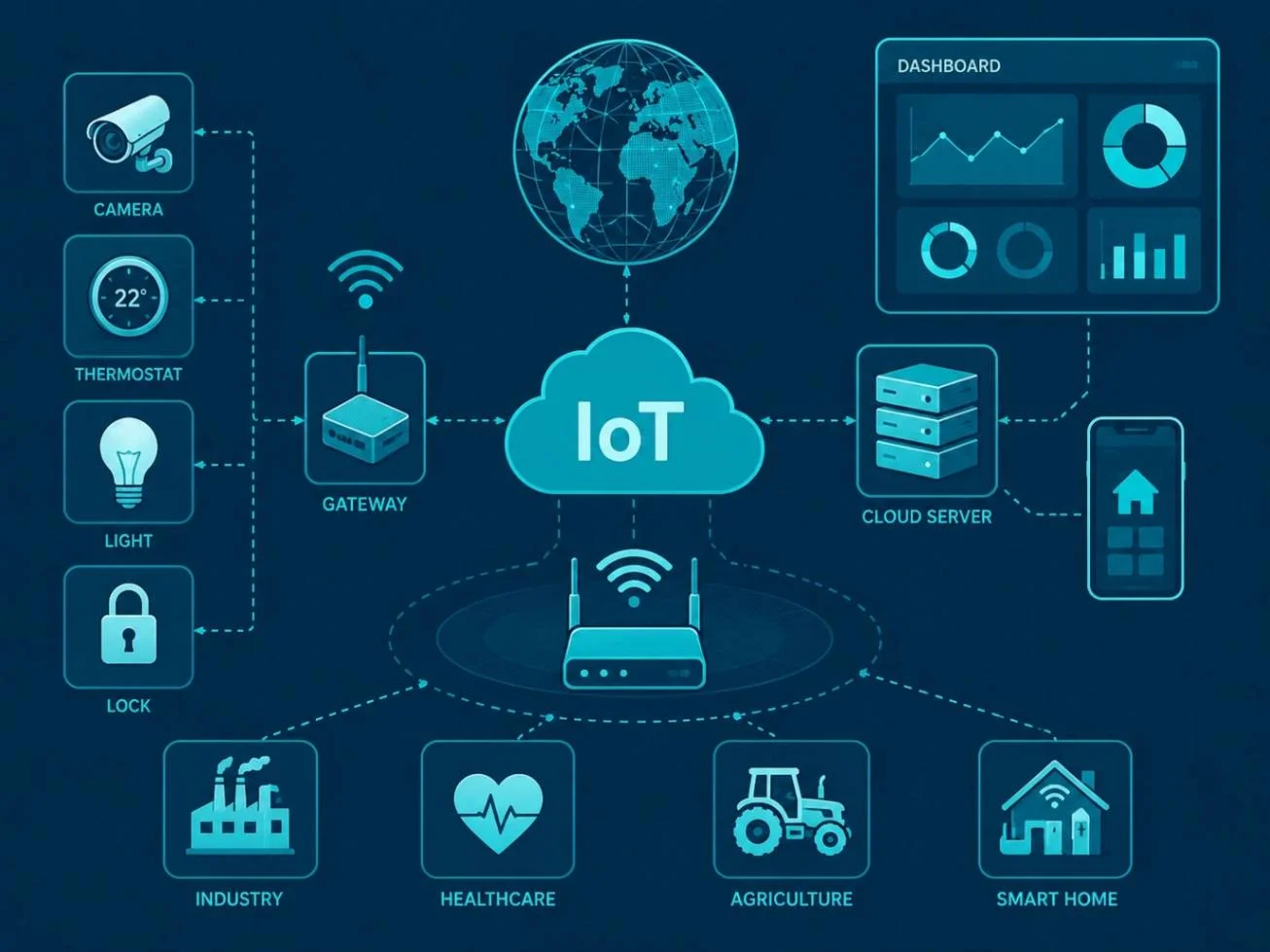
An IoT system typically consists of hardware devices, sensors, actuators, embedded software, communication networks, cloud services, and user applications. Together, these components enable intelligent automation across homes, industries, healthcare, agriculture, transportation, environmental monitoring, security systems, and manufacturing.
Today, IoT powers smart watches, fitness trackers, home automation systems, industrial robots, connected vehicles, intelligent traffic management, precision agriculture, smart factories, healthcare monitoring systems, and thousands of other real-world applications that improve efficiency, safety, and productivity.
Why Learn Internet of Things (IoT)?
The Internet of Things (IoT) has become one of the fastest-growing technologies in today's digital world. From smart homes and wearable devices to industrial automation and smart cities, IoT is transforming how people interact with technology. Connected devices collect real-time data, communicate with one another, automate routine tasks, and improve decision-making across countless industries.
Learning IoT enables you to understand how intelligent devices are designed, connected, and programmed to solve real-world problems. Rather than working only with software, IoT combines programming, embedded systems, electronics, networking, sensors, automation, and cloud technologies into one integrated skill set. This multidisciplinary approach prepares students for careers in both hardware and software development.
One of the biggest advantages of learning IoT is its wide range of applications. Smart agriculture, healthcare monitoring, home automation, industrial automation, robotics, transportation, environmental monitoring, energy management, and manufacturing all rely on Internet of Things technology to improve efficiency, reduce costs, and increase productivity.
Another major benefit is career flexibility. IoT professionals can work as Embedded Engineers, IoT Developers, Automation Engineers, Firmware Developers, Robotics Engineers, Hardware Engineers, Industrial IoT Specialists, Smart Device Developers, and Electronics Engineers. As organizations continue investing in digital transformation and Industry 4.0, professionals with IoT skills remain in high demand worldwide.
As Artificial Intelligence, Robotics, Cloud Computing, Edge Computing, 5G networks, and intelligent automation continue advancing, the Internet of Things remains one of the most future-ready technologies for engineers, developers, and technology enthusiasts.
Where is Internet of Things (IoT) Used?
Internet of Things technology is used across almost every industry because connected devices help organizations automate operations, monitor equipment, collect valuable data, and improve business efficiency.
Smart Homes
IoT powers intelligent lighting systems, smart door locks, home security systems, surveillance cameras, smart appliances, voice assistants, energy monitoring systems, and climate control solutions that improve comfort and convenience.
Industrial Automation
Manufacturing industries use IoT to monitor machinery, predict equipment failures, automate production lines, improve quality control, optimize maintenance schedules, and reduce operational costs through Industry 4.0 technologies.
Healthcare
Hospitals and healthcare organizations use IoT devices for patient monitoring, wearable health trackers, smart medical equipment, remote healthcare services, emergency response systems, and digital health management.
Agriculture
Modern farming uses IoT sensors to monitor soil moisture, weather conditions, crop health, irrigation systems, livestock tracking, and greenhouse automation to increase agricultural productivity.
Transportation & Logistics
IoT supports vehicle tracking, fleet management, intelligent traffic systems, GPS navigation, supply chain monitoring, smart warehouses, and logistics automation.
Smart Cities
Governments implement IoT solutions for intelligent traffic management, smart parking, waste management, environmental monitoring, public safety, water distribution, and energy-efficient infrastructure.
Energy & Utilities
IoT enables smart electricity meters, renewable energy monitoring, smart grids, power distribution management, water monitoring, and efficient utility management systems.
Consumer Electronics
Smart watches, fitness trackers, smart televisions, connected speakers, gaming devices, and wearable technology all depend on Internet of Things technology.
Because IoT connects billions of devices worldwide, professionals with practical IoT skills continue to be valuable across nearly every engineering and technology industry.
Why Organizations Invest in Internet of Things (IoT)
Organizations invest heavily in Internet of Things technology because connected devices improve efficiency, increase automation, reduce operational costs, and provide valuable real-time insights. Businesses can monitor equipment remotely, predict maintenance requirements, reduce downtime, optimize resource utilization, and improve productivity through intelligent connected systems.
IoT also enables businesses to collect accurate real-time data from sensors and devices, helping managers make informed decisions based on actual operational information rather than assumptions. This improves quality, safety, performance, and customer satisfaction across multiple industries.
Modern IoT solutions integrate hardware, embedded systems, networking, cloud computing, Artificial Intelligence, and automation into unified ecosystems that support intelligent business operations. Organizations use IoT to improve manufacturing, logistics, healthcare, agriculture, energy management, transportation, and customer services.
As digital transformation continues worldwide, organizations increasingly depend on IoT professionals who can design, develop, deploy, and maintain secure, scalable, and reliable connected systems.
Why Choose Our Internet of Things (IoT) Course?
Learning Internet of Things requires much more than programming an Arduino board. Professional IoT developers must understand embedded systems, sensors, digital electronics, networking, hardware interfacing, automation, communication protocols, and smart device development. Our course is designed to develop these practical skills through structured learning and hands-on implementation.
Every module begins with clear conceptual explanations followed by live demonstrations and practical hardware exercises. Students immediately apply their knowledge by programming Arduino boards, connecting sensors, designing electronic circuits, controlling digital input/output devices, implementing interrupts, using timers, and building automation projects.
Rather than teaching networking, Arduino programming, electronics, sensors, and embedded systems separately, students understand how these technologies work together to create complete Internet of Things solutions used in modern industries.
At Coding Pro Academy, practical implementation remains the primary focus. Students strengthen their engineering skills while learning hardware programming, digital electronics, sensor integration, embedded development, automation systems, and smart device design through guided laboratory sessions and real-world projects.
What Makes This Internet of Things (IoT) Course Different?
✔ Beginner-friendly learning roadmap
✔ Internet of Things Fundamentals
✔ IoT Architecture & Networking
✔ Arduino Programming
✔ Digital Input & Output Programming
✔ Sensor Integration & Event Detection
✔ Interrupts & Timers
✔ Logic Gates & Digital Electronics
✔ Integrated Circuits (ICs)
✔ Serial Communication
✔ Relay Modules & Motor Drivers
✔ Practical Circuit Design
✔ Smart Automation Projects
✔ Individual Doubt-Solving Sessions
✔ Course Completion Certificate
✔ Career Guidance & Placement Assistance
By the end of the course, students will confidently understand IoT architecture, develop Arduino-based applications, interface sensors, build embedded systems, create smart automation solutions, and complete real-world Internet of Things projects that provide a strong foundation for careers in IoT, Embedded Systems, Robotics, Automation, and Smart Technologies.
How We Teach Internet of Things (IoT)
Learning the Internet of Things (IoT) is much more than programming an Arduino board or connecting a few sensors. It is about understanding how hardware, software, electronics, networking, and automation work together to build intelligent systems that solve real-world problems. Our teaching methodology focuses on practical implementation, enabling students to gain hands-on experience while building smart devices, automation systems, and embedded applications used across modern industries.
Every module begins with a strong conceptual foundation before moving into practical demonstrations and hardware implementation. Students first understand the purpose of each IoT concept before applying it using Arduino boards, sensors, LEDs, integrated circuits, digital input/output devices, and communication interfaces. Every topic is reinforced through laboratory exercises, hardware experiments, practical assignments, and project-based learning to ensure complete technical understanding.
Rather than teaching Arduino programming, sensors, digital electronics, networking, and embedded systems separately, the course demonstrates how these technologies work together to create complete Internet of Things solutions. Students learn how to collect sensor data, process digital signals, detect events, control electronic devices, automate systems, and build intelligent connected applications.
Throughout the course, learners also understand industry-standard IoT development workflows including hardware selection, circuit design, embedded programming, sensor interfacing, event handling, serial communication, troubleshooting, automation logic, and smart device development. Continuous practical implementation strengthens logical thinking, engineering design skills, embedded programming knowledge, and problem-solving abilities while preparing students for real engineering environments.
Our objective is to ensure that every student completes the course with practical IoT knowledge, confidence in hardware programming, and the technical foundation required for careers in Embedded Systems, Automation, Robotics, Electronics, Industrial IoT, and Smart Technology Development.
Our Learning Roadmap
The Internet of Things (IoT) Course follows a structured roadmap that gradually transforms beginners into confident IoT developers. Every stage introduces new concepts while strengthening practical implementation through hardware experiments, Arduino programming, embedded development, and real-world IoT projects.
Step 1 – Build Strong IoT Fundamentals
Students begin by understanding the Internet of Things ecosystem, IoT architecture, networking fundamentals, connected devices, communication concepts, and real-world IoT applications. This stage establishes the conceptual foundation required before working with embedded hardware.
Step 2 – Learn Arduino Programming & Event Handling
Students learn Arduino programming, Arduino IDE setup, digital input/output programming, sensor interfacing, event detection, interrupts, timers, LEDs, switches, and serial communication. Practical hardware experiments help students understand how embedded systems interact with the physical world.
Step 3 – Master Digital Electronics
Students explore logic gates, truth tables, Boolean logic, integrated circuits, 555 Timer ICs, relay modules, motor drivers, and basic electronic circuit design. They learn how electronic components work together to control intelligent devices.
Step 4 – Build Smart IoT Applications
Students combine embedded programming, sensors, communication, and electronics to build practical IoT systems. They learn automation techniques while developing smart applications that monitor environments, detect events, and control electronic devices automatically.
Step 5 – Complete Real-World IoT Projects
The final stage focuses on implementing complete Internet of Things solutions. Students build practical projects including LED Blinking Systems, Smart Street Lighting, Temperature Monitoring Systems, Home Automation, and other real-world IoT applications that simulate industrial development environments.
Every stage includes practical hardware implementation, coding exercises, laboratory sessions, quizzes, troubleshooting activities, and project-based learning to ensure students gain practical engineering skills rather than only theoretical knowledge.
Who Can Join This Internet of Things (IoT) Course?
This course is designed for anyone who wants to build practical skills in Internet of Things, Embedded Systems, and Smart Device Development. Whether you are a beginner exploring IoT, an engineering student preparing for placements, a diploma holder, an electronics enthusiast, or a working professional interested in automation technologies, this course provides a structured learning roadmap suitable for learners from different backgrounds.
The curriculum begins with Internet of Things fundamentals before progressing toward Arduino programming, digital electronics, embedded systems, sensors, logic gates, integrated circuits, automation, and smart project development. Every concept is explained using practical demonstrations, hardware experiments, and real-world engineering applications that make learning simple and engaging.
This Course is Ideal For
✔ School & College Students
✔ Diploma Students
✔ B.Tech & Engineering Students
✔ Electronics Enthusiasts
✔ Embedded Systems Beginners
✔ Arduino Learners
✔ Robotics Enthusiasts
✔ Automation Engineers
✔ Hardware Developers
✔ Anyone Interested in Smart Devices & IoT
No previous electronics or programming experience is required. The course begins with beginner-friendly concepts before gradually progressing toward practical IoT development and automation systems.
What You'll Learn
The Internet of Things (IoT) Course follows a practical curriculum that introduces students to the complete IoT ecosystem while strengthening programming, electronics, automation, and embedded development skills.
Students begin with Internet of Things fundamentals before progressing toward networking concepts, Arduino programming, digital input/output programming, sensors, event detection, interrupts, timers, logic gates, integrated circuits, relay modules, motor drivers, serial communication, and practical smart device development.
Rather than studying isolated hardware concepts, students understand how sensors, microcontrollers, embedded programming, digital electronics, and automation work together to create intelligent connected systems. Through continuous practical exercises, hardware implementation, laboratory experiments, assignments, and projects, learners gain confidence in building real-world IoT applications.
Every module strengthens logical thinking, embedded programming, electronics knowledge, automation techniques, hardware interfacing, and engineering problem-solving abilities while preparing students for careers in Internet of Things, Embedded Systems, Robotics, Industrial Automation, and Smart Technology.
Skills You'll Develop
Modern IoT professionals require a combination of embedded programming, electronics knowledge, hardware interfacing, automation skills, and logical problem-solving abilities. This course develops the practical skills required to build intelligent connected systems and embedded applications.
After Completing This Course, You'll Be Able To
✔ Understand Internet of Things Architecture
✔ Program Arduino Boards Confidently
✔ Interface Sensors & Electronic Components
✔ Perform Digital Input & Output Programming
✔ Implement Interrupts & Timers
✔ Design Basic Electronic Circuits
✔ Work with Logic Gates & Integrated Circuits
✔ Develop Embedded System Applications
✔ Build Smart Automation Projects
✔ Troubleshoot IoT Hardware Systems
✔ Create Real-World IoT Applications
✔ Build a Strong Foundation for Embedded Systems, Robotics, Automation, and Industrial IoT
These practical skills prepare students for internships, Embedded Systems careers, IoT Developer roles, Automation Engineering, Electronics Engineering, Robotics, Firmware Development, Industrial IoT, and future smart technology opportunities.
Learn Through Real-World Internet of Things (IoT) Projects
The Internet of Things (IoT) is a practical technology where real expertise comes from building connected devices, programming embedded systems, integrating sensors, and developing smart automation solutions. While understanding IoT concepts is important, true confidence develops by working with real hardware, writing embedded programs, designing circuits, and creating intelligent systems that solve everyday problems. That is why project-based learning is one of the strongest features of our Internet of Things (IoT) Course.
Throughout the training, students work on practical hardware experiments, Arduino programming exercises, sensor integration, digital electronics activities, embedded system development, and industry-oriented IoT projects. Every project is carefully designed to simulate real engineering environments while strengthening programming skills, circuit design knowledge, troubleshooting techniques, and logical problem-solving abilities.
Students gradually progress from programming LEDs and digital input/output devices to integrating sensors, implementing event detection, using interrupts and timers, designing electronic circuits, and developing intelligent automation systems. During the learning process, they gain practical experience working with Arduino boards, sensors, relay modules, motor drivers, integrated circuits, logic gates, and serial communication to build complete IoT solutions.
The course also introduces smart automation projects that demonstrate how connected devices collect data, process information, and respond intelligently to changing environments. Students develop projects such as LED Blinking Systems, Smart Street Lights, Temperature Monitoring Systems, and Home Automation solutions while learning how modern IoT applications are built and deployed.
By the end of the course, students complete multiple real-world IoT projects that strengthen their technical portfolio while demonstrating practical expertise in embedded systems, Arduino programming, digital electronics, automation, and smart device development.
Benefits of Project-Based Learning
✔ Build real hardware-based IoT projects
✔ Program Arduino development boards
✔ Interface sensors and electronic components
✔ Design basic embedded systems
✔ Develop smart automation solutions
✔ Strengthen troubleshooting and hardware skills
✔ Build portfolio-ready IoT applications
✔ Prepare for engineering internships and technical careers
Career Opportunities After Learning Internet of Things (IoT)
The Internet of Things has become one of the fastest-growing technology sectors because connected devices are transforming industries across the world. Organizations actively recruit professionals who can design, develop, program, and maintain smart devices that improve operational efficiency and enable intelligent automation.
IoT professionals contribute to industries including manufacturing, healthcare, agriculture, automotive, logistics, smart cities, energy management, consumer electronics, security systems, telecommunications, and industrial automation. As businesses increasingly adopt Industry 4.0 technologies, the demand for skilled IoT professionals continues to grow rapidly.
The knowledge gained through this course also creates opportunities for specialization in Embedded Systems, Robotics, Firmware Development, Artificial Intelligence, Industrial Automation, Edge Computing, Cloud IoT, and Smart Manufacturing technologies.
Whether you plan to work in multinational companies, electronics industries, automation firms, research organizations, startups, or government projects, IoT provides excellent long-term career opportunities with continuous technological advancement.
Popular Career Opportunities
✔ IoT Developer
✔ Embedded Systems Engineer
✔ Arduino Developer
✔ Firmware Engineer
✔ Electronics Engineer
✔ Automation Engineer
✔ Robotics Engineer
✔ Industrial IoT Engineer
✔ Hardware Design Engineer
✔ Smart Device Developer
Why Internet of Things (IoT) is a Smart Career Choice
The Internet of Things is revolutionizing the way devices communicate and interact with the physical world. Billions of connected devices are being deployed across homes, industries, transportation systems, healthcare organizations, agriculture, and smart cities, creating enormous demand for skilled IoT professionals.
Unlike many engineering disciplines that focus on a single technology, IoT combines embedded programming, electronics, networking, automation, cloud computing, sensors, communication protocols, and Artificial Intelligence into one multidisciplinary career. This broad technical foundation creates opportunities across multiple industries while preparing students for future technological innovations.
Another significant advantage is continuous growth. Technologies such as Smart Cities, Autonomous Vehicles, Wearable Devices, Industrial Automation, Smart Agriculture, Healthcare Monitoring, Edge Computing, Artificial Intelligence, and Industry 4.0 all depend heavily on Internet of Things technologies. Students who develop strong IoT skills today position themselves for exciting opportunities in tomorrow's connected world.
Whether your goal is engineering, embedded development, robotics, automation, electronics, product development, or entrepreneurship, Internet of Things remains one of the most future-focused and rewarding career choices in modern technology.
Internet of Things (IoT) Course Highlights
What You'll Experience During the Training
✔ Internet of Things Fundamentals
✔ IoT Components & Architecture
✔ Networking Basics for IoT
✔ Arduino Programming
✔ Arduino IDE Setup
✔ Digital Input & Output Programming
✔ Sensors & Event Detection
✔ Interrupts & Timers
✔ Logic Gates & Digital Electronics
✔ Integrated Circuits (ICs)
✔ 555 Timer IC
✔ Relay Modules & Motor Drivers
✔ Serial Communication
✔ Practical Circuit Design
✔ LED Blinking Project
✔ Smart Street Light Project
✔ Temperature Monitoring System
✔ Home Automation Project
✔ Hands-on Hardware Practice
✔ Individual Doubt Solving
✔ Course Completion Certificate
✔ Career Guidance & Placement Assistance
Why Students Choose Internet of Things (IoT) Classes in Adajan, Surat
Students searching for an IoT Course in Adajan, Internet of Things Classes in Adajan, Arduino Training in Surat, Embedded Systems Course, or Smart Device Development Training are looking for practical learning that prepares them for modern engineering careers rather than only theoretical knowledge.
This course follows a project-driven learning methodology where every concept is reinforced through live hardware demonstrations, Arduino programming, sensor interfacing, embedded development, digital electronics experiments, automation systems, and real-world IoT projects. Students gain confidence by building intelligent devices that simulate actual industrial and commercial IoT applications.
Whether you're preparing for engineering placements, embedded systems development, robotics, automation engineering, electronics design, Industrial IoT careers, or higher studies in smart technologies, this course provides the practical knowledge, technical skills, and industry-oriented experience required to succeed in the rapidly growing IoT industry.


 Programming2 months